great millet
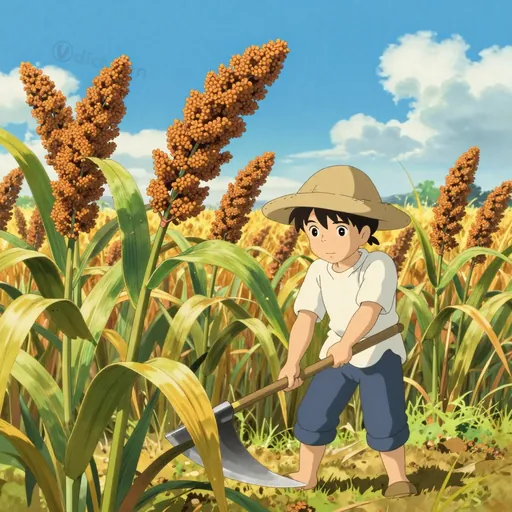
Noun: A type of cereal grass (Sorghum bicolor) cultivated for its grain, which is important for human and animal food. Its growth habit and stem form are similar to Indian corn (maize), but it has leaves with sawtooth-edged margins.
This term is used specifically to refer to the plant species Sorghum bicolor in an agricultural or botanical context. It describes the plant's physical characteristics and its primary use as a food source. - Farmers in the region rely on great millet as a drought-resistant staple crop. - The great millet field stood tall, its sawtooth-edged leaves rustling in the wind.
- Botanical Classification: The term "great millet" is a common name used to distinguish from other millet species like pearl millet or finger millet. It is often used in agricultural texts and discussions about staple crops in arid regions.
- Sorghum: This is the more common and scientific name for the same plant species (). "Great millet" is a synonym for certain types of sorghum grown primarily for grain.
- Guinea Corn: Another regional common name for sorghum, particularly in parts of Africa.
- Kafir Corn: A historical name for sorghum, now considered outdated and potentially offensive.
- Sorghum
- Grain Sorghum
The term "great millet" refers specifically to the plant Sorghum bicolor. It does not refer to other types of millet (e.g., pearl millet, proso millet) or to maize/corn, despite the noted similarity in stem form.
- important for human and animal food; growth habit and stem form similar to Indian corn but having sawtooth-edged leaves