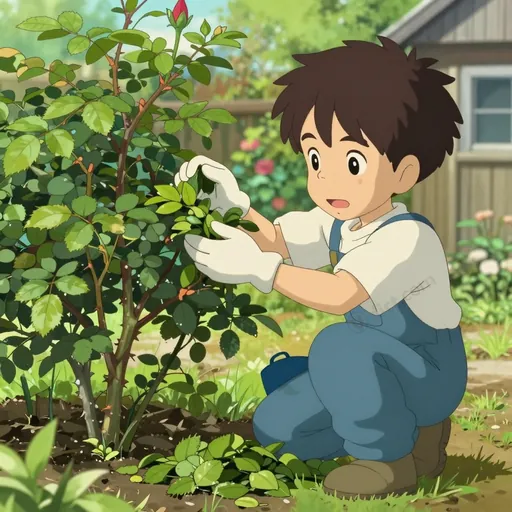
disleave
Definition
Verb (transitive): - To strip or remove leaves from (a plant): "disleave" means to remove all or most of the leaves from a plant, tree, or branch, often by plucking, cutting, or causing them to fall.
Usage Examples
- (The gardener removed all the leaves from the rose bushes.)
- (The wind caused the trees to lose their leaves.)
- (She stripped the leaves from the stems.)
Advanced Usage
"to become disleaved": to lose leaves naturally or by external force.
- The old oak became disleaved after the storm. (The oak lost all its leaves due to the storm.)
"disleaving as a pruning technique": intentional removal of leaves to promote plant health or shape.
- Disleaving the lower branches improves air circulation. (Removing leaves from the lower part of the plant helps air flow.)
Variants and Related Words
Disleaf (verb): a variant spelling of "disleave," used with the same meaning.
- The farmer disleafed the grapevines to expose the fruit to sunlight. (He removed leaves from the vines.)
Disleafing (noun): the act or process of removing leaves.
- Disleafing is sometimes necessary to control pests. (Removing leaves is needed for pest management.)
Synonyms
- Defoliate: to strip a plant of leaves, especially in a systematic or chemical way.
- Strip: to remove leaves by pulling or cutting.
- Denude: to make bare, especially by removing leaves.
Phrasal Verbs
- Disleave off: (rare) to remove leaves by pulling them away.
- He disleaved off the dead foliage from the houseplant. (He removed the dead leaves from the plant.)
Related Idioms