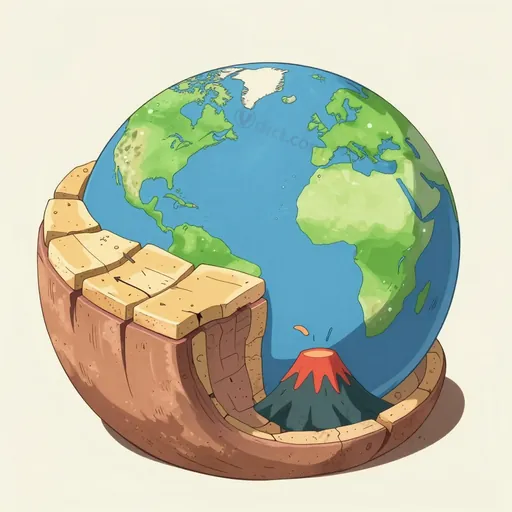
geodynamics
Definition
Noun (plural in form but used with a singular verb): The branch of geology dealing with the forces and processes that cause movements and deformation of the Earth's crust and interior.
Usage Examples
- (The study of forces that shape the Earth's surface.)
- (An academic field focusing on Earth's internal processes.)
Advanced Usage
- "mantle geodynamics": The study of the dynamics of the Earth's mantle, including convection currents.
- Recent research in mantle geodynamics has revealed new patterns of heat transfer. (The specific application of geodynamics to the mantle layer.)
- "computational geodynamics": The use of computer models to simulate Earth's tectonic and thermal processes.
- Computational geodynamics allows scientists to predict future continental drift scenarios. (A specialized branch using numerical simulations.)
Variants and Related Words
- Geodynamic (adj): Relating to the forces or movements within the Earth.
- The geodynamic model predicted a new fault line. (Adjective form of geodynamics.)
- Geodynamicist (n): A scientist who specializes in geodynamics.
- The geodynamicist presented her findings on plate tectonics. (A person working in this field.)
Synonyms
- Tectonophysics: The study of the physical processes that cause tectonic movements.
- Earth dynamics: A broader term for the study of Earth's internal and surface movements.
Related Idioms
- "in the geodynamics of the situation": A figurative use meaning the underlying forces or pressures at play in a complex system.
- The geodynamics of the political conflict were driven by economic tensions. (The hidden forces influencing the situation.)
Phrasal Verbs
- Apply geodynamics to: To use the principles of geodynamics in a specific context.
- We can apply geodynamics to predict erosion patterns. (Use the science to analyze a phenomenon.)