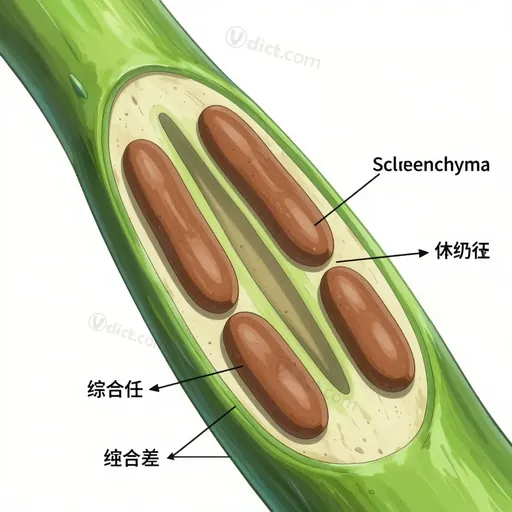
sclerenchyma
Definition
Noun (Botany): A type of plant tissue composed of cells with thick, lignified cell walls, providing mechanical support and structural strength to the plant. Sclerenchyma cells are typically dead at maturity and are found in stems, leaves, and seed coats.
Usage Examples
- (The tissue provides structural support.)
- (The fibers from this tissue are durable.)
- (The cells are dead and have reinforced walls.)
Advanced Usage
- "Sclerenchyma fibers": Long, slender cells that are flexible yet strong, commonly found in flax, hemp, and jute.
- The sclerenchyma fibers of flax are processed to make linen. (The fibers are extracted for textile production.)
- "Sclerenchyma sclereids": Shorter, more variable-shaped cells that form hard, gritty textures, such as in pear fruit or nutshells.
- The gritty texture of a pear is caused by clusters of sclerenchyma sclereids. (These cells create a sand-like feel.)
Variants and Related Words
- Sclerenchymatous (adj): Relating to or consisting of sclerenchyma.
- The sclerenchymatous layer in the seed coat protects the embryo. (The layer is made of sclerenchyma.)
- Prosenchyma (n): A type of sclerenchyma composed of long, tapering cells (often synonymous with sclerenchyma fibers).
Synonyms
- Mechanical tissue: General term for plant tissue providing support (includes sclerenchyma and collenchyma).
- Stone cells: Common name for sclerenchyma sclereids, especially in fruits.
Related Idioms
- — this term is strictly technical and used in botanical contexts.
Phrasal Verbs
- — it is a noun and does not form verb phrases.