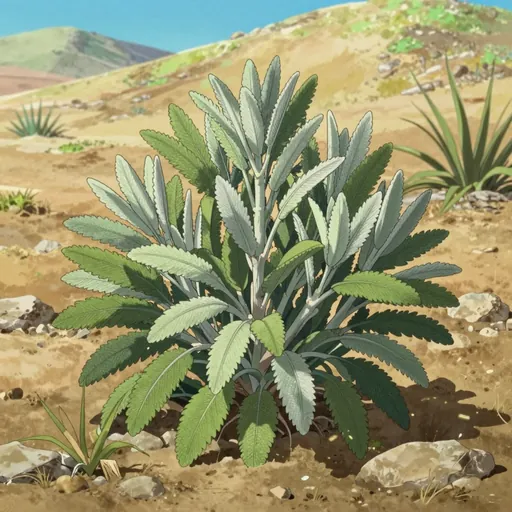
silver sage
Definition
Noun: 1. A low, much-branched perennial shrub of the western United States with silvery leaves; an important browse and shelter plant for wildlife. This term refers specifically to a species of plant (Artemisia cana) known for its distinctive silvery-gray foliage and its ecological role in its native habitat.
Usage Examples
- Noun:
- The hills were covered in silver sage, giving the landscape a soft, gray-green hue.
- During the harsh winter, mule deer rely on silver sage for food and cover.
- Botanists study the drought-resistant properties of silver sage.
Advanced Usage
- Ecological Role: The term is often used in ecological and conservation contexts to describe a native plant species that is crucial for preventing erosion and supporting local fauna.
- The restoration project aims to reintroduce native grasses and silver sage to the degraded prairie.
Variants and Related Words
- Silver sagebrush: A common variant name for the same plant species.
- Silver sagebrush is often found in the same regions as big sagebrush.
- Sage (noun): A broader term for various aromatic plants in the genus (used in cooking) or the genus (like sagebrush). "Silver sage" is a specific type within the latter group.
- Browse (noun, in this context): Twigs, shoots, and leaves of trees and shrubs used as food by animals.
- The silver sage provides essential browse for herds of pronghorn.
Synonyms
- Sand sage (Note: This can refer to a different but related species, , and may not be a perfect synonym in all botanical contexts.)
- Silvery wormwood (A less common name that references its genus, .)
Related Phrases
- Sagebrush steppe: The type of arid ecosystem where silver sage and similar plants are dominant.
- The vast sagebrush steppe of the Great Basin is home to many unique species.
Noun
- low much-branched perennial of western United States having silvery leaves; an important browse and shelter plant
Khám phá thêm
Các từ liên quan
Từ chứa "silver sage"