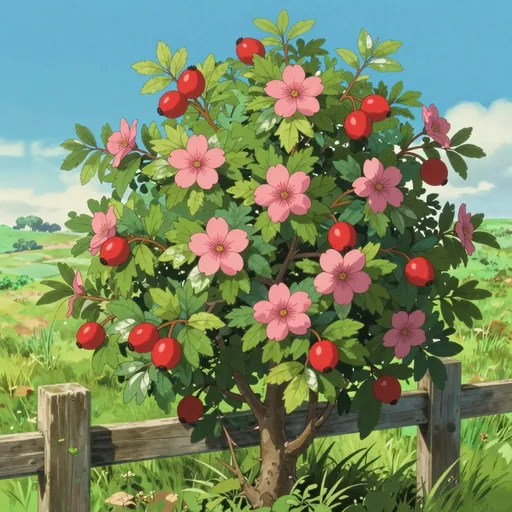
sweet-brier
Noun: - A wild rose species: "sweet-brier" refers to Rosa rubiginosa (also known as Rosa eglanteria), a shrubby rose native to Europe and western Asia, characterized by fragrant leaves and pink flowers. It is also called the eglantine rose.
- (A wild rose bush with aromatic foliage.)
- (A specific type of rose cultivated for its scent.)
"Sweet-brier" as a botanical term: In horticulture, "sweet-brier" is often distinguished from other wild roses by its glandular, sweet-smelling leaves rather than its flowers.
- The sweet-brier is valued in perfumery for its leaves, which yield an essential oil resembling that of apples. (The plant's leaves are used to produce aromatic oils.)
"Sweet-brier" in literature: The plant appears in poetry and prose as a symbol of natural beauty and rustic charm.
- Shakespeare mentioned the sweet-brier in "A Midsummer Night's Dream," where it is associated with woodland enchantment. (A literary reference to the plant.)
Sweetbrier (n): an alternate spelling of "sweet-brier," often used interchangeably.
- The sweetbrier's thorns make it a good defensive hedge. (A variant spelling with the same meaning.)
Eglantine (n): another name for "sweet-brier," especially in older English usage.
- The eglantine rose is famous for its fragrant leaves. (A synonym for the same plant.)
- Eglantine: the primary synonym for "sweet-brier," referring to the same wild rose species.
- Wild rose: a broader term for uncultivated rose species, though "sweet-brier" is a specific type.
"As sweet as a sweet-brier": an archaic simile meaning very sweet or fragrant.
- Her perfume was as sweet as a sweet-brier, lingering in the air. (A comparison to the plant's scent.)
"Under the sweet-brier": a poetic phrase implying a rustic, idyllic setting.
- They made their home under the sweet-brier, surrounded by nature. (A metaphorical use suggesting a peaceful, natural environment.)
Khám phá thêm
Các từ liên quan
Từ chứa "sweet-brier"