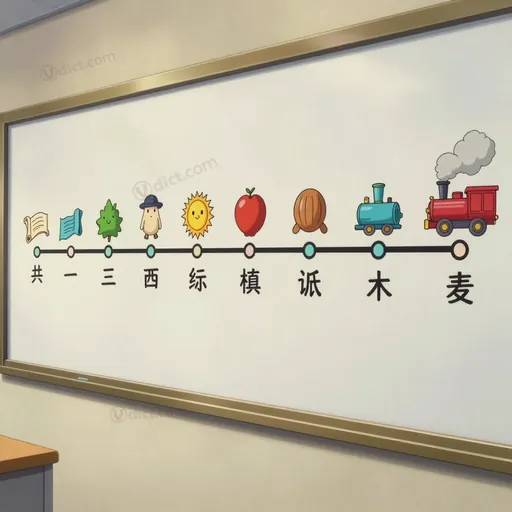
temporal arrangement
Definition
Noun: 1. The organization or sequence of events in time: This term refers to the specific order, timing, or chronological structure in which events are placed or occur.
Usage
- The term "temporal arrangement" is a formal, often academic noun used to describe the structure of time within a narrative, process, or sequence. It focuses on events are ordered relative to each other in time.
- It is commonly used in fields like linguistics, literature, history, and project management to analyze or describe sequences.
Examples
- In Linguistics: "The use of verb tenses is crucial for indicating the temporal arrangement of actions in a sentence."
- In Literature: "The novel's complex temporal arrangement, with its frequent flashbacks, challenges the reader's perception of the story."
- In Project Planning: "The Gantt chart provides a clear visual representation of the project's temporal arrangement and dependencies."
Advanced Usage
- "temporal arrangement of data": Refers to how data points are ordered chronologically in a dataset or database.
- Example: "Analyzing the temporal arrangement of data revealed seasonal patterns in consumer behavior."
Variants and Related Words
- Temporal (adj): Relating to time.
- Arrangement (n): The way things are organized or ordered.
- Chronology (n): The sequential order in which past events occur; a similar concept but often implies the historical sequence, while "temporal arrangement" can describe a constructed or narrative sequence.
- Sequence (n): A particular order in which related events, movements, or things follow each other.
Synonyms
- Time structure
- Chronological order
- Sequence of events
- Temporal order
Related Phrases
- Temporal sequencing: A phrase with nearly identical meaning, emphasizing the order of events in time.
- Example: "The study examined the temporal sequencing of language acquisition in children."
Noun
- arrangement of events in time
Khám phá thêm
Các từ liên quan
Từ đồng nghĩa