basidiospore
Noun A sexually produced fungal spore borne on a basidium. A basidiospore is the reproductive spore of fungi belonging to the division Basidiomycota, which includes mushrooms, puffballs, and rusts. It is formed through a process of sexual reproduction on a specialized microscopic structure called a basidium.
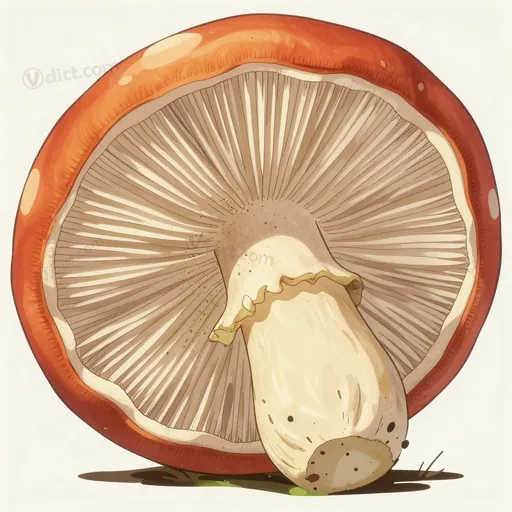
The term is used in scientific contexts, specifically in mycology (the study of fungi), biology, and agriculture, to describe a specific type of fungal reproductive cell. * The mushroom releases millions of basidiospores from the gills beneath its cap. * Under the microscope, you can observe the basidiospores attached to the basidia. * The life cycle of a typical mushroom involves the dispersal and germination of basidiospores.
- Dispersal mechanism: Basidiospores are typically forcibly ejected from the basidium, a process known as ballistospory.
- Ploidy: Basidiospores are haploid, meaning they contain a single set of chromosomes.
- Basidium (noun): The club-shaped microscopic structure on which basidiospores develop.
- Basidiomycete (noun): Any fungus of the division Basidiomycota that produces basidiospores.
- Conidium (noun): An asexually produced fungal spore (contrasts with the sexually produced basidiospore).
- Fungal spore (general term)
- Reproductive spore (general term)
This is a specialized scientific term with no common alternative meanings outside of mycology.
-
a sexually produced fungal spore borne on a basidium