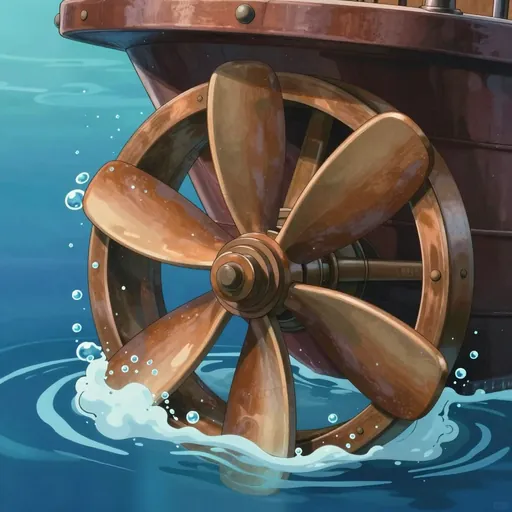
cavitation
Definition
- Noun:
- Formation of cavities: Cavitation refers to the formation of empty spaces (cavities or bubbles) within a liquid, typically caused by rapid changes in pressure.
- Bubble formation in fluid: In physics and engineering, cavitation specifically describes the process where vapor bubbles form and collapse in a liquid, often due to a drop in pressure below the liquid's vapor pressure.
Usage Examples
- (The formation and collapse of bubbles eroded the propeller.)
- (Bubble formation disrupts normal pump operation.)
- (Bubbles form and collapse, generating shock waves.)
Advanced Usage
"Cavitation erosion": the wear or damage to a solid surface caused by the repeated collapse of cavitation bubbles.
- The turbine blades suffered from cavitation erosion after years of use. (The surface was pitted and worn by bubble collapse.)
"Hydrodynamic cavitation": cavitation that occurs in flowing liquids, such as in pipes or around moving objects.
- Hydrodynamic cavitation is studied to improve ship propeller design. (Bubble formation in water flow affects performance.)
"Acoustic cavitation": cavitation induced by sound waves, especially in ultrasound.
- Acoustic cavitation is used in medical imaging to enhance contrast. (Sound waves create bubbles in tissue or fluid.)
Variants and Related Words
Cavitate (verb): to undergo or cause cavitation.
- The liquid began to cavitate as the pressure dropped. (Bubbles started forming in the liquid.)
Cavity (noun): a hollow space or hole, often inside a solid object or body.
- The dentist filled the cavity in my tooth. (A hollow space caused by decay.)
Synonyms
- Bubble formation: the process of creating gas-filled pockets in a liquid.
- Vaporization: the change from liquid to vapor, which can occur during cavitation.
Phrasal Verbs
- (No common phrasal verbs for "cavitation" exist; it is primarily used as a noun in technical contexts.)
Related Idioms
- (No idioms are associated with "cavitation"; it is a specialized scientific term.)