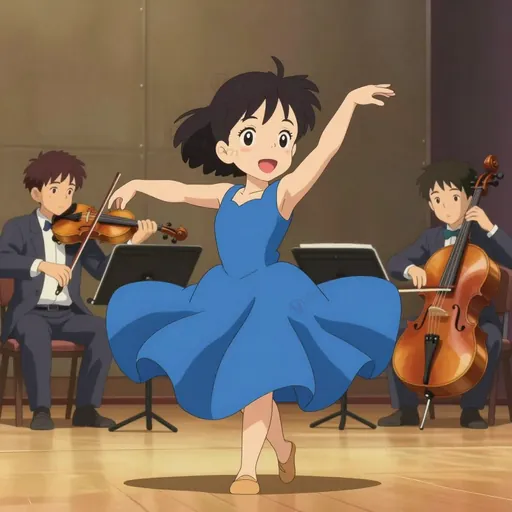
eurhythmy
Noun: 1. The interpretation in harmonious bodily movements of the rhythm of musical compositions; used to teach musical understanding: A form of expressive movement or dance where the body physically interprets and expresses the rhythm, structure, and feeling of music or spoken poetry.
Eurhythmy is a specific, formal term. It is most commonly used in contexts related to performing arts, music education, and particularly within Waldorf education, where it is a core subject. It describes a disciplined art form, not casual movement.
- The students practiced eurhythmy to develop a deeper connection with the poem's meter and mood.
- A performance combining speech and eurhythmy was presented at the festival.
- In the Waldorf curriculum, eurhythmy is considered a vital tool for integrating a child's physical, emotional, and intellectual development.
- As a pedagogical tool: Eurhythmy is used to teach musical concepts like rhythm, pitch, and dynamics through physical gesture.
- As a therapeutic practice: Sometimes used in movement therapy to promote harmony and well-being.
- As a performing art: Can be a staged performance art akin to dance, often set to music or recitation.
- Eurythmy: An alternative spelling, often used interchangeably.
- Eurythmist (noun): A practitioner of eurhythmy.
- Eurhythmic (adjective): Pertaining to or characterized by harmonious rhythm and movement.
- Interpretive dance: (A broader, more general term for dance that expresses the content of music or story).
- Movement art: (A very broad term encompassing any art form based on bodily movement).
The term is highly specific and should not be confused with general dance or exercise. Its core meaning involves a direct, harmonious translation of an external rhythmic structure (from music or speech) into purposeful, graceful human movement.
-
the interpretation in harmonious bodily movements of the rhythm of musical compositions; used to teach musical understanding
Khám phá thêm
Các từ liên quan
Từ đồng nghĩa
Từ gần giống