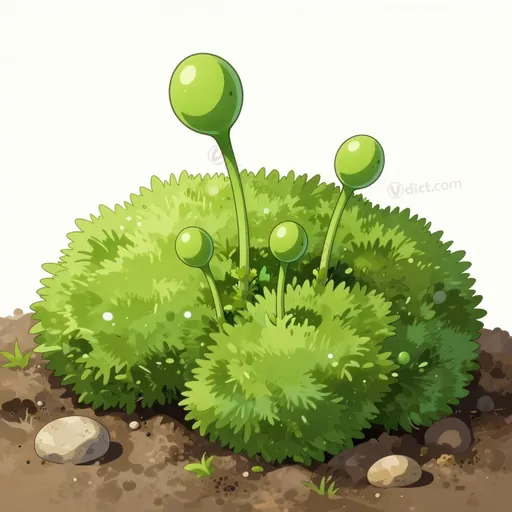
gemmiferous
/dʤe'mifərəs/
Definition
- Adjective:
- Bearing or reproducing by a gemma: In botany, this describes a plant or plant structure that produces or bears a small, asexual reproductive bud called a gemma. A gemma is a small, multicellular structure that can detach and grow into a new individual.
Usage
- The term "gemmiferous" is a specialized biological adjective, primarily used in botanical contexts to describe specific reproductive methods in plants like liverworts and mosses.
- It is not commonly used in everyday language.
Examples
- Adjective:
- The gemmiferous cup of the liverwort is easily visible under a microscope. (This describes the cup-shaped structure that bears the gemmae.)
- This species is gemmiferous, allowing it to spread rapidly across the forest floor. (This describes the plant's reproductive characteristic.)
Advanced Usage
- Scientific Description: Used in formal scientific writing to precisely describe a mode of asexual reproduction.
- The study focused on the gemmiferous propagules of the bryophyte population.
Variants and Related Words
- Gemma (n): The small, asexual reproductive bud itself.
- Each gemma can develop into a genetically identical new plant.
- Gemmification (n): The process of forming gemmae.
- Gemmiparous (adj): A synonym meaning "producing gemmae."
Synonyms
- Bud-bearing: A more general, less technical term.
- Gemmiparous: A direct synonym used in biological texts.
Notes
- "Gemmiferous" is a compound word formed from the Latin root (meaning "bud" or "jewel") and the suffix (meaning "bearing" or "producing"). It is unrelated to the word "gem" meaning a precious stone, although they share the same etymological root.
Adjective
- bearing or reproducing by a gemma