sleetiness
Definition
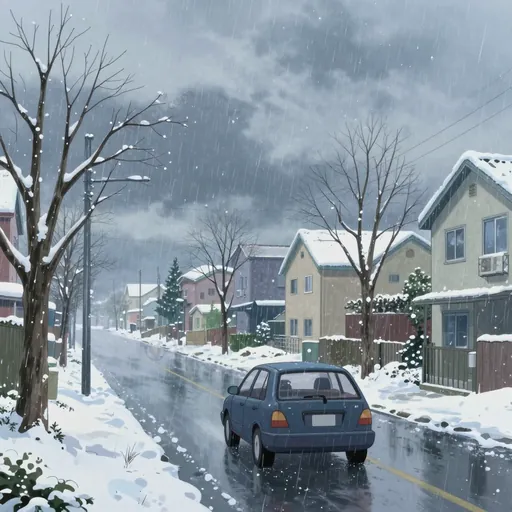
Noun (uncountable): - The state or quality of being sleety: "Sleetiness" refers to the condition or characteristic of weather that involves sleet (a mixture of rain and snow or partially melted snow). It describes the presence or prevalence of sleet in a given environment.
Usage Examples
- (The weather condition characterized by sleet created dangerous driving conditions.)
- (Meteorologists predicted a greater amount of sleet in the weather.)
Advanced Usage
"a degree of sleetiness": a measure or extent of sleet in the weather.
- The report noted a moderate degree of sleetiness along the coastal regions. (The weather report indicated a noticeable but not extreme amount of sleet.)
"persistent sleetiness": a prolonged period of sleet.
- The persistent sleetiness kept residents indoors for days. (The continuous sleet weather forced people to stay inside.)
Variants and Related Words
Sleet (n): precipitation consisting of a mixture of rain and snow.
- The sleet fell steadily throughout the afternoon. (The mixture of rain and snow came down without pause.)
Sleety (adj): characterized by or resembling sleet.
- The sleety roads were treacherous for pedestrians. (The roads covered with sleet were dangerous for people walking.)
Sleetiness (n): the noun form derived from "sleety," denoting the quality of being sleety.
Synonyms
Iciness: the state of being icy or covered with ice.
- The iciness of the pavement caused many falls. (The icy condition of the pavement led to many accidents.)
Slushiness: the quality of being slushy (partially melted snow).
- The slushiness of the streets made walking unpleasant. (The soft, wet snow on the streets made walking uncomfortable.)
Related Idioms
- No direct idioms: "Sleetiness" is a technical or descriptive term and does not commonly appear in idiomatic expressions. However, weather-related idioms like "rain or shine" (regardless of weather conditions) may be used in contrast.