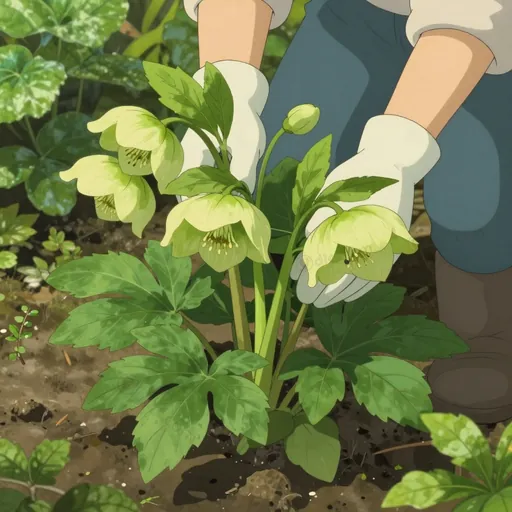
stinking hellebore
Definition
Noun: 1. A specific plant species: "Stinking hellebore" is the common name for Helleborus foetidus, a perennial flowering plant in the buttercup family (Ranunculaceae). It is characterized by its deeply divided, finger-like (digitate) leaves, clusters of bell-shaped, pale green flowers often edged with purple, and a distinctive, unpleasant odor when its foliage is crushed.
Usage
- The term is used as a common name to identify this specific plant, often in botanical, horticultural, or historical medicinal contexts.
- It is typically used as a compound noun: "the stinking hellebore" or "a patch of stinking hellebore."
Examples
- In a garden description: "Despite its name, is valued by gardeners for its architectural foliage and early spring blooms."
- In a botanical text: "The is easily distinguished from other species by its pungent scent and digitate leaves."
- In a warning: "All parts of the are toxic if ingested."
Advanced Usage / Notes
- The "stinking" in its name directly references the strong, unpleasant smell emitted by its leaves when bruised.
- Historically, various hellebore species were used in medicine, but internal use is dangerous due to their toxicity. The reference to "irritant qualities when taken internally" highlights this historical context and associated risks.
Variants and Related Words
- Bear's foot: A less common alternative common name for the same plant ().
- Hellebore (noun): The general term for plants in the genus . "Stinking hellebore" is one specific type.
- Christmas rose (Helleborus niger): A different, more commonly cultivated hellebore species with white flowers.
- Lenten rose (Helleborus orientalis): Another popular hellebore species with a wide variety of flower colors.
Synonyms
- Botanical name: (This is the precise scientific synonym).
Word Origin / Etymology
- Hellebore: From Latin , from Greek .
- Stinking: From Middle English, referring to having a strong, offensive smell. The compound name "stinking hellebore" has been in use for centuries to describe this particular plant.
Noun
-
digitate-leaved hellebore with an offensive odor and irritant qualities when taken internally
Khám phá thêm
Các từ liên quan
Từ đồng nghĩa