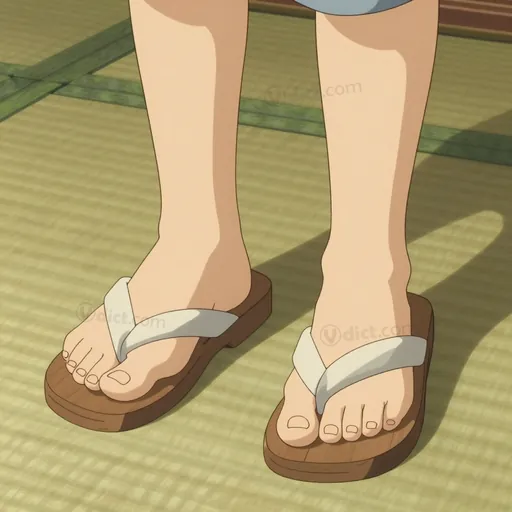
tabis
Noun: A type of traditional Japanese sock characterized by a divided toe design, specifically separating the big toe from the other toes. It is designed to be worn with footwear like thong sandals (e.g., geta or zōri).
Tabis are worn as a traditional garment, often as part of formal or semi-formal Japanese attire. They are specifically designed to accommodate the thong of traditional sandals. - She wore white tabis with her kimono and *zōri sandals to the tea ceremony.* - The craftsman carefully stitched the cotton tabis by hand.
- Jikatabi: A variant of that are designed as outdoor work boots with a rubber sole. While related, are a compound word and a distinct item from the traditional sock.
- The construction workers wore durable jikatabi for safety and grip.
- Tabi socks: A modern, sometimes Westernized term for socks inspired by the traditional design, often used for fashion or with toe shoes.
- Ifuku (衣服): The general Japanese word for clothing; are a specific type of .
- Divided-toe socks: A descriptive synonym in English.
- Japanese socks: A general, less precise term.
Tabis are distinct from regular socks. The key defining feature is the separation for the big toe, which is a functional design for traditional Japanese footwear. They are typically made from cotton or silk and can be white or colored, with white being common for formal occasions.
-
a sock with a separation for the big toe; worn with thong sandals by the Japanese