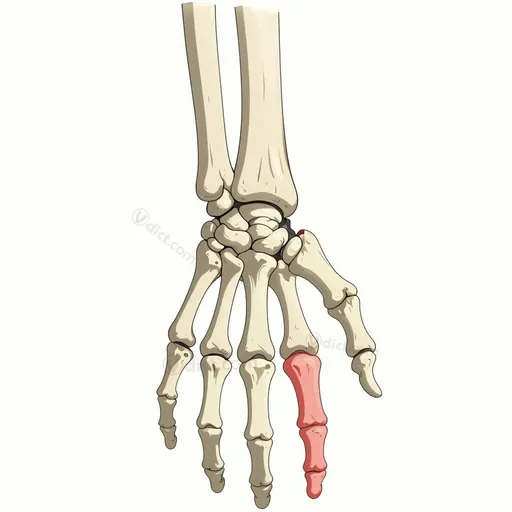
triquetral
Noun: 1. A small, pyramid-shaped bone in the wrist: The triquetral (also called the triquetrum) is one of the eight carpal bones of the wrist. It is located on the medial side (the side of the little finger) of the proximal row of carpal bones.
The word "triquetral" is a specialized anatomical term. It is used almost exclusively in medical, anatomical, and clinical contexts to refer to this specific bone. * It functions as a noun, typically preceded by the definite article "the" or an adjective (e.g., "fractured," "left"). * Example: The triquetral articulates with the lunate and pisiform bones.
- The term can be used attributively as an adjective to describe other anatomical structures related to this bone, such as the "triquetral facet" on an adjacent bone.
- Example:
- Triquetrum: This is a synonym and the more formal Latin name for the same bone. The two terms are used interchangeably in medical literature.
- Example: The triquetrum is also known as the triquetral bone.
- Cuneiform bone: This is an older, now less common, name for the same bone.
- Carpal bones: This is the general category of wrist bones to which the triquetral belongs.
- Triquetrum
- Os triquetrum (full Latin term)
- Cuneiform bone (historical/less common)
The word "triquetral" has no other common meanings in modern English outside of anatomy. Its root relates to the Latin triquetrus, meaning "three-cornered," which describes the bone's pyramidal shape. Do not confuse it with the unrelated word "triptych."
-
a wrist bone that articulates with the pisiform and hamate and lunate bones
Khám phá thêm
Các từ liên quan
Từ đồng nghĩa
Từ chứa "triquetral"
Từ có nhắc đến "triquetral"