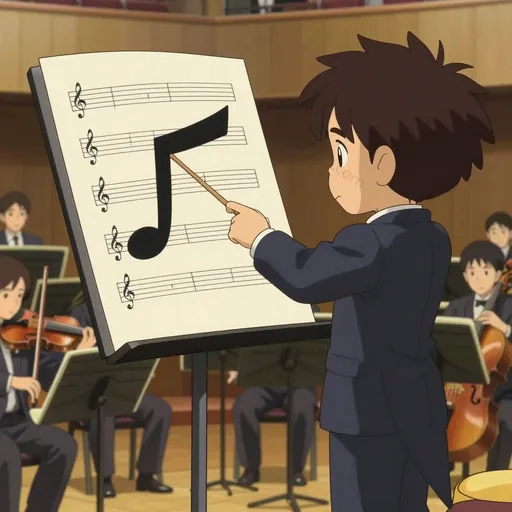
segno
Definition
Noun: 1. (Music) A sign, specifically the sign 𝄋 or the abbreviation seg., placed in a musical score to mark the beginning or end of a passage that is to be repeated.
Usage
- The segno is a navigational instruction for the performer. It tells them to return to the marked point and repeat the music from there, often in combination with other instructions like "Dal Segno" (D.S., meaning "from the sign").
- It is used in written sheet music to avoid rewriting sections, making the score more concise.
Examples
- The instruction "D.S. al Coda" means "go back to the segno and play until you reach the 'To Coda' marking, then jump to the Coda section."
- You will find the segno symbol at the beginning of the chorus in this piece.
- The composer placed a segno at bar 16 to indicate the repeat point.
Advanced Usage
- Dal Segno (D.S.): An instruction meaning "from the sign." It directs the performer to go back to the segno and continue playing from that point.
- Dal Segno al Fine (D.S. al Fine): Means "from the sign to the end." The performer repeats from the segno and plays until the point marked (end).
- Dal Segno al Coda (D.S. al Coda): Means "from the sign to the coda." The performer goes back to the segno, plays until a "To Coda" instruction, and then jumps forward to a separate concluding section marked "Coda."
Variants and Related Words
- Coda (noun): A concluding section of a musical composition.
- Fine (noun): A marking meaning "the end" or "finish" in a musical score.
- Repeat sign (noun): The symbol or indicating a section should be repeated immediately.
Synonyms
- Sign (in the specific musical context)
- Repeat mark (general term, of which is a specific type)
Related Phrases
- From the segno: The literal translation of "Dal Segno," describing the action of returning to that point.
Noun
-
(music) a notation written at the beginning or end of a passage that is to be repeated