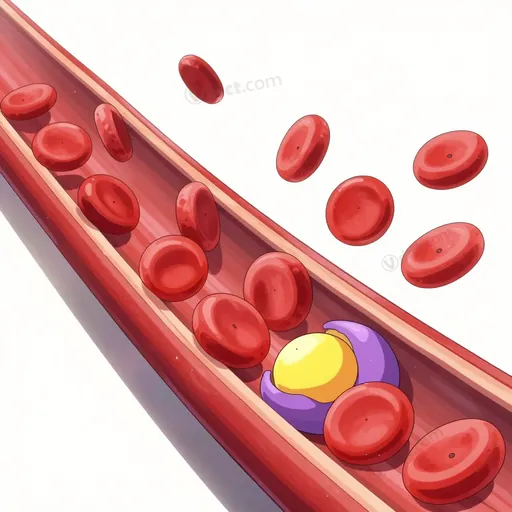
thrombasthenia
Definition
- Noun:
- A rare hereditary blood disorder: Thrombasthenia is a medical term for a rare, inherited condition. It is characterized by a defect in the blood platelets (thrombocytes), which prevents them from clumping together (aggregating) properly to form a blood clot. This failure results in a tendency for prolonged or excessive bleeding (hemorrhage).
Usage Examples
- Noun:
- The patient was diagnosed with thrombasthenia after experiencing recurrent nosebleeds and easy bruising.
- Thrombasthenia is caused by a deficiency or dysfunction of a specific protein on the surface of platelets.
- Management of thrombasthenia often involves avoiding medications that affect platelet function and may require platelet transfusions before surgery.
Advanced Usage
- Glanzmann thrombasthenia: This is the full and specific name for the disorder. It is an eponym, named after the Swiss pediatrician Eduard Glanzmann who first described it.
- Glanzmann thrombasthenia is the most severe form of this inherited platelet disorder.
Variants and Related Words
- Thrombasthenic (adj): Relating to or affected by thrombasthenia.
- The thrombasthenic patient required special care during dental procedures.
Synonyms
- Glanzmann's disease: An alternative name for the same condition.
- Platelet function disorder: A broader category of conditions that includes thrombasthenia.
Noun
-
a rare autosomal recessive disease in which the platelets do not produce clots in the normal way and hemorrhage results