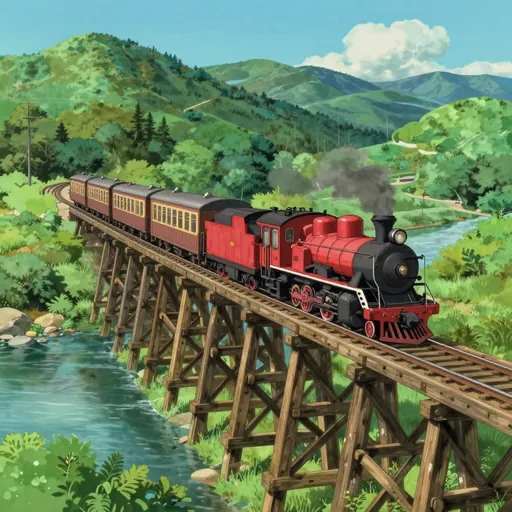
trestlework
Definition
Noun: A structure built as a framework of connected trestles, used to provide support for a bridge, pier, scaffold, or similar construction.
Usage
Trestlework is a technical term used primarily in civil engineering, construction, and architecture. It refers to the assembled framework that forms a foundational or elevated support system.
Examples
- The old railway bridge was renowned for its intricate trestlework spanning the deep valley.
- Construction crews assembled the trestlework to support the temporary roadway while the permanent overpass was being built.
- The pier's stability depended on the robust wooden trestlework beneath the surface.
Advanced Usage
- Engineering Context: In engineering reports, "trestlework" specifies the structural design and material composition of the support system, e.g., "The project's feasibility study analyzed the steel trestlework for the new aqueduct."
- Historical Context: The term is often used when describing 19th and early 20th-century infrastructure, particularly for railways.
Variants and Related Words
- Trestle (noun): A single rigid frame used as a support, typically consisting of a horizontal beam on two pairs of sloping legs. This is the fundamental component of trestlework.
- Trestle bridge (noun): A bridge consisting of a series of short spans supported by trestlework.
Synonyms
- Framework
- Support structure
- Latticework (when referring to an open framework, though not identical)
Antonyms
- Solid foundation (a continuous, unbroken base of support)
Noun
-
a supporting structure composed of a system of connected trestles; for a bridge or pier or scaffold e.g.
Khám phá thêm
Các từ liên quan
Từ có nhắc đến "trestlework"