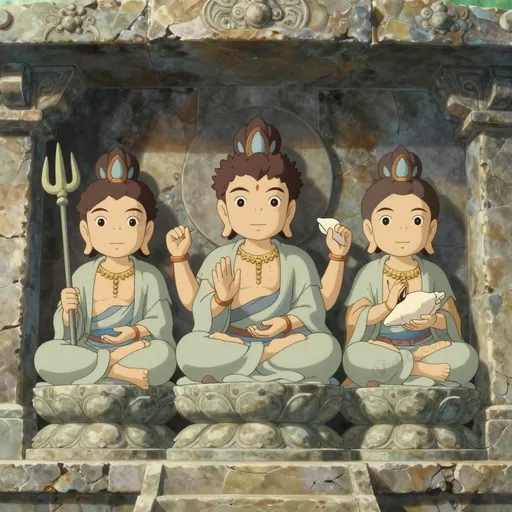
trimurti
Definition
Noun: - The triad of divinities of later Hinduism: In Hindu theology, the Trimurti is a concept representing the three primary aspects or functions of the supreme divine reality, personified as three gods: Brahma (the creator), Vishnu (the preserver), and Shiva (the destroyer or transformer). This triad symbolizes the cosmic cycles of creation, preservation, and dissolution.
Usage Examples
- Noun:
- The concept of the Trimurti is central to understanding the balance of cosmic forces in Hinduism.
- Many temples in South India feature sculptures depicting the Trimurti.
Advanced Usage
- Philosophical Interpretation: The Trimurti is often interpreted not as three separate gods, but as three forms of the one ultimate, formless Brahman.
- In Advaita Vedanta philosophy, the Trimurti is seen as a saguna (with attributes) manifestation of the nirguna (without attributes) Brahman.
Variants and Related Words
- Trimurti is a proper noun. There are no direct variant spellings in English.
- Related Concept: Trideva: A synonym sometimes used in Sanskrit and Hindu texts to refer to the same triad.
Synonyms
- Hindu Trinity: A common English term used to describe the Trimurti, drawing an analogy to the Christian Trinity.
- The Great Triad: A more general descriptive term.
Notes on Meaning
- The Trimurti is a specific theological concept from the period of Hinduism (later Hinduism). It is distinct from earlier Vedic triads.
- It represents a functional unity and interdependence, not a hierarchy.
Noun
-
the triad of divinities of later Hinduism
Khám phá thêm
Các từ liên quan
Từ đồng nghĩa