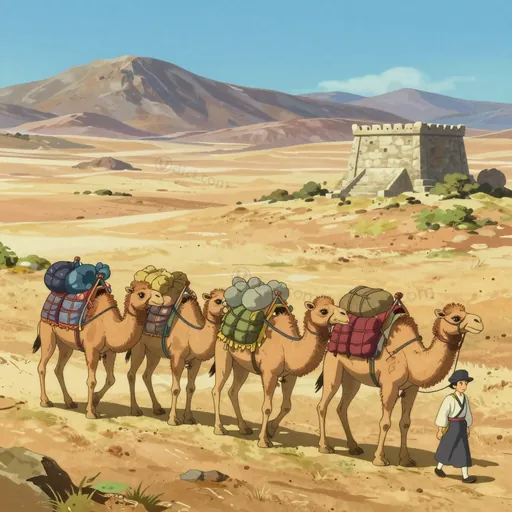
turkistan
Definition
- Proper noun:
- A historical region of Central Asia: Turkistan refers to a vast historical area in Central Asia, known for its role as a significant cultural and commercial crossroads connecting Eastern and Western civilizations.
Usage
- The term "Turkistan" is used primarily in historical, geographical, and cultural contexts to refer to the region inhabited traditionally by Turkic peoples.
- It is often discussed in relation to the Silk Road, ancient empires, and the history of Central Asia.
Examples
- Proper noun:
- Many ancient Silk Road routes passed through the cities of Turkistan.
- The history of Turkistan is marked by the influence of various nomadic empires.
Advanced Usage
- "Chinese Turkistan": A historical term often used to refer to the Xinjiang region, indicating the eastern part of the broader Turkistan area.
- Archaeological findings in Chinese Turkistan have revealed ancient manuscripts.
- "Western Turkistan": Typically used to refer to the Central Asian republics of the former Soviet Union.
- The khanates of Western Turkistan were major political powers in the 18th and 19th centuries.
Variants and Related Words
- Turkestan: An alternate spelling for Turkistan.
- The map labeled the region as Turkestan.
- Central Asia: The modern geographical region that encompasses the area of historical Turkistan.
- Silk Road: The network of trade routes for which Turkistan was a central hub.
Synonyms
- Central Asian region: A broad, modern synonym for the geographical area.
- Transoxiana: A historical name for a portion of Turkistan, specifically the area between the Amu Darya and Syr Darya rivers.
Notes on Meaning
- The term "Turkistan" is historical and cultural rather than denoting a current political entity. Its boundaries have shifted throughout history.
- It carries strong connotations of the Silk Road, cultural exchange, and the history of Turkic peoples.
Noun
-
a historical region of central Asia that was a center for trade between the East and the West
Khám phá thêm
Các từ liên quan
Từ gần giống
Từ chứa "turkistan"
Từ có nhắc đến "turkistan"