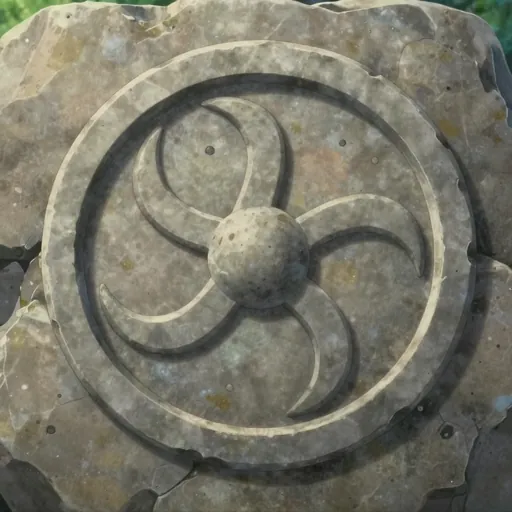
triskelion
Noun: A triskelion is a symbolic figure or emblem consisting of three identical, stylized elements. These elements, often depicted as three bent human legs, three spiraling arms, or three interlocking curved lines, radiate symmetrically from a single central point. It is an ancient symbol found in various cultures, notably associated with Sicily and the Isle of Man.
The word triskelion is used to describe a specific type of radial, three-fold symbol, particularly in contexts of history, heraldry, symbolism, and art. * The flag of the Isle of Man prominently features a triskelion composed of three armored legs. * Archaeologists discovered a pottery shard bearing a triskelion, suggesting early cultural exchange. * The symbol's meaning is often interpreted to represent concepts like motion, progress, competition, or the cyclical nature of life.
- Heraldic Charge: In heraldry, the triskelion is used as a distinctive charge on coats of arms and flags.
- Modern Symbolism: Beyond its historical use, the triskelion is adopted in modern logos and designs to evoke themes of dynamism, Celtic heritage, or triadic principles (e.g., mind, body, spirit).
- Triskele: An alternative name for the same symbol.
- Triskel: A less common shortened form.
- Triquetra: A different, though sometimes confused, ancient symbol consisting of three interlocking vesicae piscis shapes, often used in Celtic art.
- Triple spiral
- Three-legged symbol
- Trinacria (specifically for the Sicilian version featuring the head of Medusa and three wheat ears or legs)
- No common idioms directly incorporate the word "triskelion." It is primarily a technical term for the symbol itself.
-
a figure consisting of three stylized human arms or legs (or three bent lines) radiating from a center
Khám phá thêm
Các từ liên quan
Từ đồng nghĩa