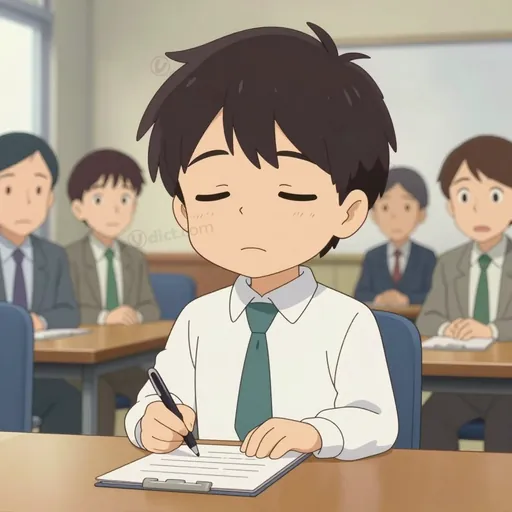
twitching
Definition
- Noun:
- A sudden, involuntary muscle contraction: "Twitching" refers to a quick, small, and often repeated movement of a muscle or group of muscles, typically not under conscious control. It is often associated with a nervous condition, fatigue, or stress.
Usage
- As a noun, "twitching" describes the physical phenomenon itself. It is commonly used in medical, physiological, and general descriptive contexts.
- Example:
Examples
- Noun:
- Persistent twitching can be a symptom of certain neurological disorders.
- She felt a slight twitching in her leg after the long run.
- The doctor asked about the frequency of the facial twitching.
Advanced Usage
"Eye twitching": A common specific type of twitch affecting the eyelid muscles.
- Stress and lack of sleep are common causes of eye twitching.
"Muscle twitching": A general term for this phenomenon occurring in any muscle.
- Benign muscle twitching is usually harmless and temporary.
Variants and Related Words
Twitch (verb/noun): The base form. As a verb: to make a sudden, quick movement. As a noun: a single instance of such a movement.
- Verb: His finger began to twitch. Noun: She gave a nervous twitch.
Twitchy (adj): Characterized by or prone to twitching; also used figuratively to mean nervous or jumpy.
- He felt twitchy and anxious before the presentation.
Synonyms
- Spasm: A sudden involuntary muscular contraction, which can be more prolonged or severe than a twitch.
- Fasciculation: A medical term for a small, local, involuntary muscle contraction visible under the skin.
- Tic: A sudden, repetitive, nonrhythmic motor movement or vocalization, often more complex than a simple twitch.
Antonyms
- Stillness: The absence of movement.
- Relaxation: The state of being free from tension and involuntary contractions.
Notes on Meaning
- While the provided reference specifies "especially one caused by a nervous condition," twitching can also result from other factors such as physical exertion, electrolyte imbalance, caffeine intake, or simple fatigue. The core meaning remains a sudden, involuntary muscle spasm.
Noun
-
a sudden muscle spasm; especially one caused by a nervous condition
Khám phá thêm
Các từ liên quan
Từ đồng nghĩa
Từ có nhắc đến "twitching"